You have a website.
It looks good. Your logo is there. Your services are listed. You have added some images, a contact page and maybe even a WhatsApp button.
But there is one problem.
The enquiries are not coming.
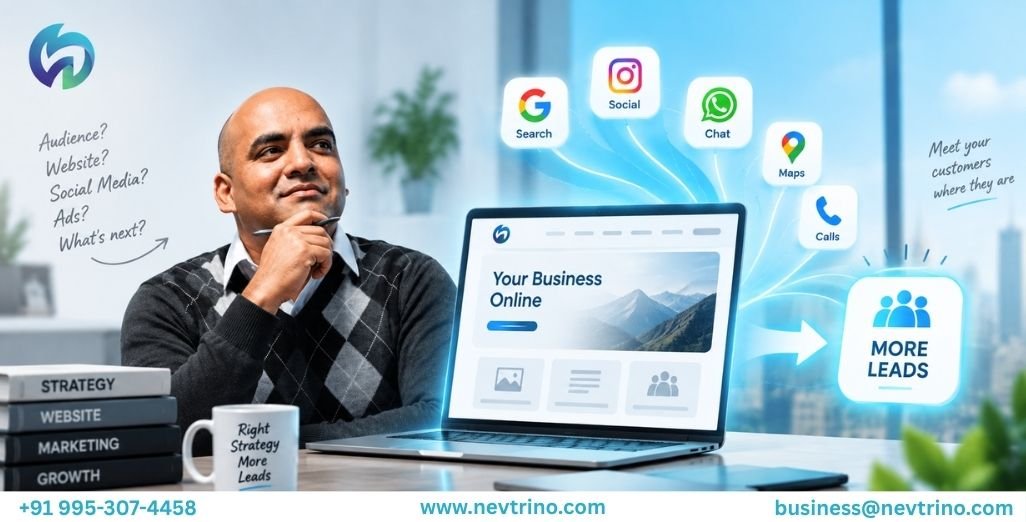
You may be getting visitors from Google, social media or even Google Ads, but when you check your phone, there are very few calls or messages.
At this point, many businesses start thinking about getting a new website.
But before spending more money, there is a more important question to ask:
Is a website actually the right place to reach your customers?
This is something we believe businesses should think about before building a website.
A website can be an important part of digital marketing, but it should not be treated as a requirement for every business.
Your digital strategy should start with your customer.
Before Building a Website, Understand Your Customer
Think about your customers first.
How do they normally find businesses like yours?
Do they check Google Maps?
Do they spend more time on Instagram or Facebook?
Do they prefer calling or sending a WhatsApp message?
Do they visit a website before making a decision?
Are they comfortable buying online?
Can you generate leads without a website?
These questions can completely change your digital marketing strategy.
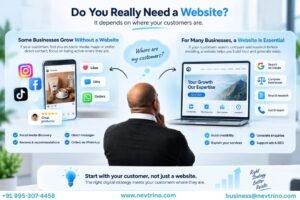
For example, imagine you run a small local business where most customers discover you through Instagram.
They see your products, check your photos and videos, read comments, look at reviews, send you a DM and then place an order through WhatsApp.
In this situation, spending a large amount of money on a website may not be your first priority.
You may get better results by improving your social media presence, creating better content, optimizing your Instagram or Facebook profile, running social media campaigns and making it easier for people to contact you.
This is where Social Media Optimization, or SMO, can be a better starting point.
Now consider another business.
Suppose you provide professional services and your potential customers search Google before choosing a company. They compare different businesses, read their websites, check their experience and then decide whom to contact.
For this business, a proper website can be extremely important.
Similarly, if you sell products and customers expect to browse products, check prices and place orders online, then an e-commerce website may make more sense.
So before asking:
“Do I need a website?”
Ask:
“Where are my customers, and how do they prefer to interact with my business?”
A good digital marketing agency should understand this before recommending a website, SEO, social media marketing or paid advertising.
A Website Should Have a Purpose
Once you know that your customers actually need or use a website, the next question is:
What should the website do for your business?
A website should not exist simply because every competitor has one.
It should have a clear purpose.
For example, your website may be designed to:
- Generate enquiries
- Get phone calls
- Generate WhatsApp conversations
- Book appointments
- Sell products
- Build trust
- Explain your services
- Generate leads from Google
- Support your Google Ads campaigns
Once you know the purpose, the design and content become much easier to plan.
Think About What Happens When Someone Finds You
Imagine someone searches Google for a service you provide.
They click your website.
They are seeing your business for the first time.
They do not know your company the way you do.
They do not know your team.
They do not know how long you have been operating.
They do not know whether your service is good.
They do not know whether they can trust you.
They are trying to understand everything from what they see on your website.
So your website needs to answer some basic questions quickly:
What do you do?
Can you solve my problem?
Why should I choose you?
Can I trust you?
How can I contact you?
If the website does not answer these questions, the visitor may leave even if your business is perfectly capable of helping them.
1. Make It Clear What You Actually Do
One of the first things a visitor should understand is what your business does.
Do not make people guess.
A headline like:
“We create digital experiences for modern businesses.”
may sound professional, but it does not tell a customer much.
A clearer message could explain what you provide and who you help.
For example:
“Website Development and Digital Marketing for Small Businesses in India.”
Then explain briefly how you help.
The goal is not to create the most creative headline.
The goal is to make the business easy to understand.
2. Build Your Website Around Customer Intent
This is where website development and digital marketing need to work together.
Do not create pages only because they look good in the website menu.
Think about what your potential customers are searching for.
If you provide:
- SEO
- Google Ads
- Website Development
- Social Media Marketing
- Local SEO
you should not necessarily put everything on one general services page.
A customer searching for SEO services for small businesses has a different requirement from someone searching for website development.
Create useful pages for important services.
Each page can explain:
- What the service is
- Who it is for
- What problem it solves
- What is included
- Your process
- Previous work
- Common questions
- How the customer can contact you
This is useful for customers and also gives your SEO strategy a stronger foundation.
3. Do Not Send Every Google Ads Visitor to Your Homepage
This is a common problem in paid advertising.
A business runs an advertisement for one particular service, but sends every visitor to the homepage.
Imagine someone searches:
“Google Ads management company”
They click your advertisement.
Instead of seeing information about Google Ads management, they land on a homepage containing ten different services.
Now they have to search around your website to find what they were originally looking for.
That creates unnecessary friction.
A relevant landing page can be much more useful.
The advertisement, keyword and landing page should make sense together.
For example:
Google search → Google Ad → Google Ads service page → Trust → Information → CTA → Enquiry
This gives the visitor a much clearer journey.
4. Build Trust Before Asking for the Lead
A customer may be interested in your service but still have doubts.
They may be thinking:
“Have they done this before?”
“Are they reliable?”
“Will I get what I am paying for?”
This is why trust matters so much on a lead generation website.
You can use:
- Customer testimonials
- Google reviews
- Case studies
- Previous projects
- Client logos
- Certifications
- Industry experience
- Real team information
- Results from previous campaigns
Do not simply tell people that you are experienced.
Show them evidence wherever possible.
If you say you have helped businesses grow, show relevant examples of your work.
5. Write Content Based on Real Customer Questions
Your customers already have questions.
You just need to understand what those questions are.
For example, if you provide SEO services, potential customers may ask:
“How long does SEO take?”
“How much does SEO cost?”
“Will SEO work for my business?”
“Do I need SEO if I am already running Google Ads?”
“What happens if my website has technical problems?”
These questions can become valuable website content.
You can answer them through:
- Service pages
- FAQs
- Blog posts
- Case studies
- Guides
- Comparison pages
This is much more useful than publishing blogs simply because someone decided that the website needs two new articles every month.
Good content should help the customer make a better decision.
6. Give Visitors a Clear Next Step
A visitor may be interested in your service but still not know what to do next.
Do not make them search for your contact page.
Use clear calls to action such as:
Get a Free Consultation
Request a Quote
Discuss Your Project
Book a Consultation
Talk to Our Team
Send an Enquiry
The CTA should also match the customer’s intent.
Someone reading a detailed service page may be ready to contact you.
Someone reading an educational blog may still be researching.
Your website should give both visitors an appropriate next step.
7. Keep Your Contact Form Simple
A customer who wants to make an enquiry should not have to complete a long questionnaire.
For the first interaction, you may only need:
- Name
- Phone number or email
- Requirement
You can collect additional information later.
Every unnecessary field creates another opportunity for the customer to leave.
Also provide other ways to contact you if they are relevant to your business.
For example:
- Phone
- Contact form
- Consultation booking
Make the process as easy as possible.
8. Make Your Website Work With Your SEO Strategy
SEO should not be something you think about after the website is finished.
It should be considered during the planning stage.
Think about:
- Search intent
- Website structure
- Service pages
- Internal linking
- Page titles
- Headings
- Content
- URLs
- Mobile usability
- Website speed
- Technical SEO
For example, if your business has five important services but everything is placed on one page, you may be making it harder to create useful pages around those individual services.
A properly planned website gives your SEO strategy a better foundation.
9. Your Website Must Work Well on Mobile
Before judging your website on a large desktop screen, open it on your phone.
Think like a customer.
Can you easily read the text?
Can you find the important information?
Can you open the menu?
Can you click the phone number?
Can you send a WhatsApp message?
Does the contact form work?
Does the page load quickly?
A potential customer may discover your business while sitting in a cafe, travelling, waiting for someone or simply scrolling through their phone.
If the website is difficult to use, they may not give you another chance.
10. Track What Happens After People Visit
Traffic alone does not mean your website is successful.
Suppose 10,000 people visit your website but only five people enquire.
Now compare that with another website receiving 1,000 visitors and generating 50 enquiries.
Which one would you prefer?
This is why a digital marketing agency should look beyond traffic.
- Contact form submissions
- Phone calls
- WhatsApp clicks
- Quote requests
- Consultation bookings
- Product enquiries
Then compare this data with your marketing channels.
For example, if Google Ads is bringing visitors but very few enquiries are coming through, increasing the advertising budget may not be the first solution.
The problem could be the landing page, offer, messaging, trust signals or CTA.
You need to understand the problem before spending more money.
11. Keep Improving After the Website Goes Live
Launching a website does not mean the job is finished.
Your customers will show you what needs improvement.
Maybe one service page receives a lot of traffic but very few enquiries.
Maybe visitors leave quickly from another page.
Maybe mobile users convert less than desktop users.
Maybe one CTA receives more clicks than another.
This information gives you opportunities to improve the website.
This is known as website conversion optimization.
Sometimes the solution can be surprisingly simple.
A clearer headline.
A better CTA.
A shorter form.
A stronger testimonial.
A better service explanation.
A faster mobile experience.
You do not always need to rebuild the entire website.
Sometimes you need to understand what is stopping people from taking the next step.
Your Website Is Only One Part of Your Digital Marketing
This is something businesses should remember.
A website should not work separately from the rest of your marketing.
Your SEO brings people from search.
Your Google Ads brings targeted visitors.
Your social media creates awareness and engagement.
Your content answers customer questions.
Your website brings these visitors together and helps move them towards an enquiry or purchase.
For example:
SEO → Relevant search → Service page → Trust → Enquiry
Or:
Google Ads → Relevant landing page → Clear offer → CTA → Lead
Or:
Social media → Engaging content → Profile → Website or WhatsApp → Enquiry
The right path depends on how your customers behave.
That is why there is no single digital marketing strategy that works for every business.
So, Do You Actually Need a Website?
Maybe.
But the answer should come from your customer behaviour, not from a generic recommendation.
If your customers search Google and compare businesses online, a website may be essential.
If customers mainly discover you through Instagram and communicate through WhatsApp, improving your social media presence may be a better first step.
If customers need to see your location, reviews and contact details, Google Business Profile and local SEO may be important.
If customers need to browse products and purchase online, an e-commerce website may be the right solution.
And if your business needs all of these channels, then a combination of SEO, social media, paid advertising and a strong website may be the best approach.
The right digital strategy starts with understanding the customer, not selling a particular service.
Final Thoughts
A website should not simply be something your business has because everyone else has one.
It should have a purpose.
Before building one, understand where your customers spend their time, how they search, how they make decisions and what they need before contacting you.
Then build your digital presence around that behaviour.
If a website is the right solution, build one that does more than look good.
Make it easy to understand.
Make it trustworthy.
Make it useful.
Make it easy to contact you.
Connect it with your SEO, Google Ads, social media and content strategy.
And most importantly, keep measuring what happens after people arrive.
Because the real question is not:
“Does my website look good?”
The better question is:
“When the right customer finds my business, does my online presence give them enough reason to take the next step?”
That is where a website can move from being just another business expense to becoming a real part of your lead generation strategy.